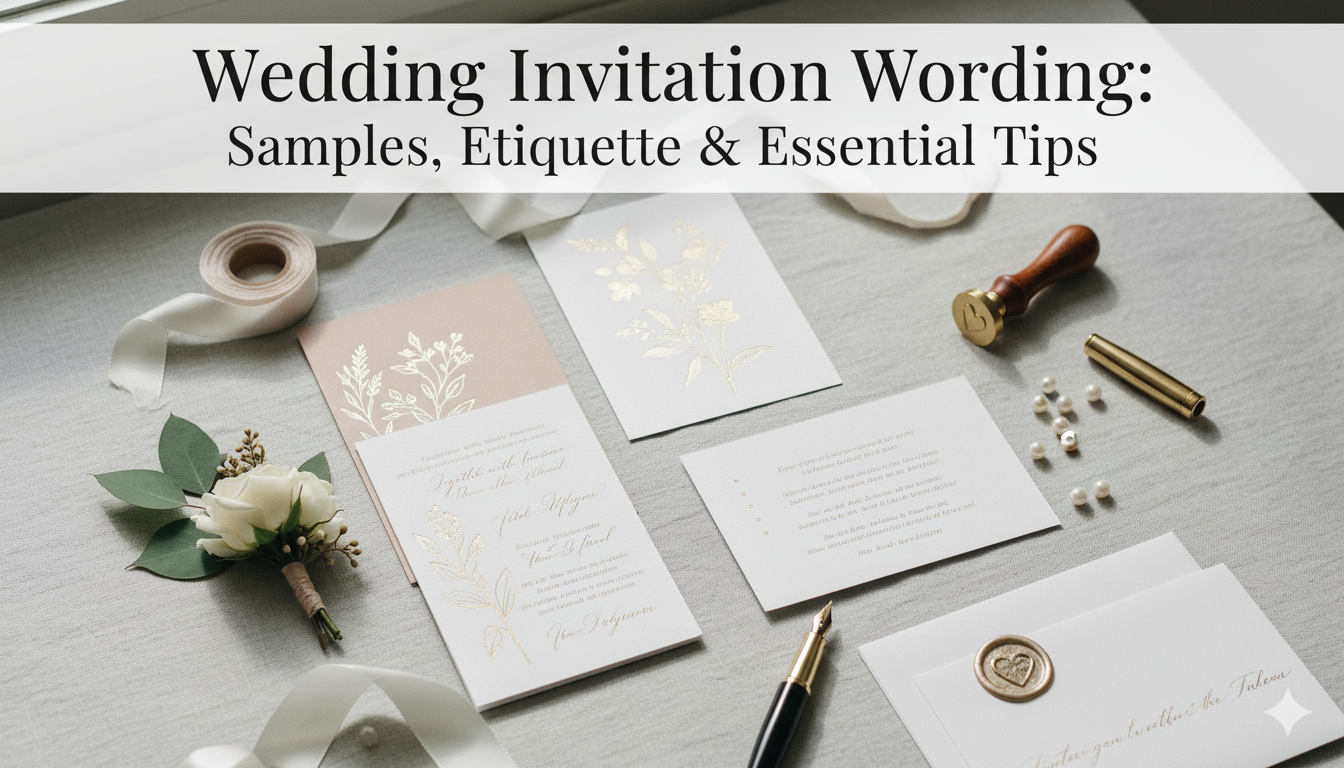
What to write on wedding invitations means what to say on wedding invites, from the intro and hosts to date, venue and RSVP. Easy-to-read type lets guests see who is inviting, what is happening, and how to respond. Typical components are the couple’s names, a brief welcoming phrase, the date and time, the full address, dress code, and RSVP info with a date. A lot of couples like to include a line about their story, faith, or family, and keep names in an order that works for their culture. To keep errors down, type full names, spell out months and verify spellings of locations. Up next, view easy templates, formal and informal tones, and sample lines you can tailor with ease.
Crafting Your Invitation Wording
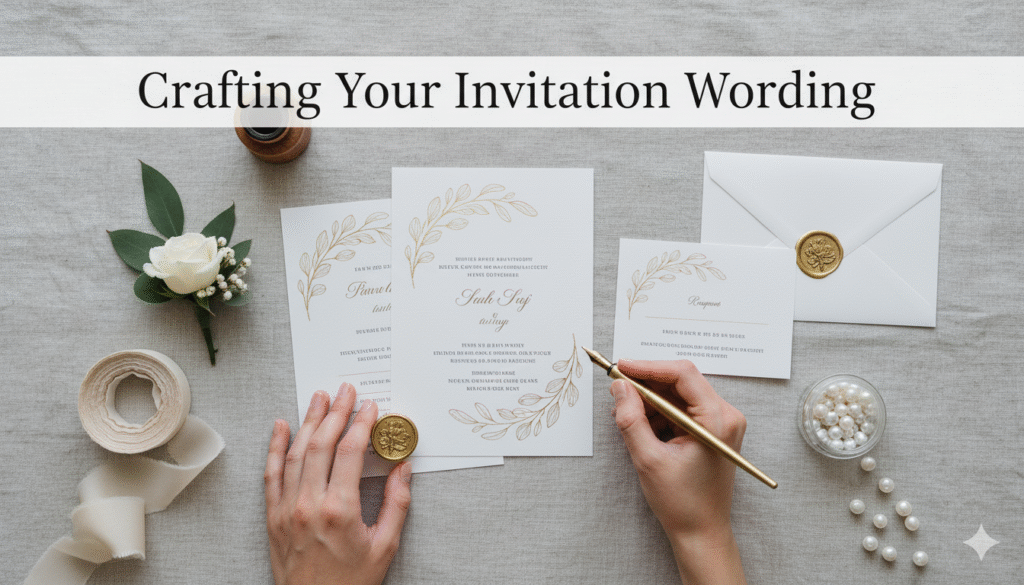
Establish the vibe initially. Whether it’s a formal wedding invitation or a casual reception, the proper wedding invitation wording sets the tone for your guests’ expectations, dress, and mood. Ensure the vital details are easy to read, particularly any numbers, using a crisp font.
- Hosts’ names
- Clear request line
- Couple’s full names
- Date, day, and time
- Venue name and full address
- Reception details
- RSVP method and deadline (8–12 weeks for destination weddings)
- Dress code and any access notes
1. The Hosts
List who hosts at the top. Parents, the couple, or both is fine — match the formality. Use titles and full names for formal invites: “Mr. Mrs. Daniel Okoro.” For divorced parents, list on separate lines. For remarried, add in spouses if they co-host.
For a casual, couple-hosted line: “Together with their families, Lina Chen and Rafael Duarte invite you…” A formal parent-hosted line: “Mr. Mrs. Daniel Okoro request the honour of your presence.
2. The Request
Put it after the host line and before the couple’s names. Select words that match the ceremony and location. For a religious or formal ceremony, use “request the honour of your presence.” For a secular or modern ceremony, use “request the pleasure of your company.” Keep both partners appearing side by side and equal in whatever language you’d like if that’s your culture.
Sample formal: “Request the honour of your presence at the marriage of.” Casual: “Invite you to celebrate their wedding.” Playful styles are fine if they suit your theme and guests.
3. The Couple
Include full names for clarity. For a more traditional tone, include middle names. Sequencing can go by etiquette, with one partner first, usually the bride, or your choice. For international guests, add both last names and maintain formatting across lines.
Examples: “Amara N. Patel and Lucas J. Mendes.” Modern: “Amara Patel and Lucas Mendes.” Consistency grounds the design and prevents it from feeling scattered.
4. The Details
Give your date and year in full for formal (“Saturday, the fifteenth of June, two thousand twenty-six”) or in numerals for modern. Tell us the start time with “o’clock” or a.m. Or p.m. Don’t forget to list the full venue address, city, and region for guests flying in. If there’s room, include a short note for directions, parking, or access requirements or insert a QR code that points to a map.
RSVP info should be clear: a website link or email, and a deadline, especially 8 to 12 weeks ahead for destination plans.
5. The Reception
Indicate if the reception follows on site or list a separate venue with address. Including small prompts such as “cocktails, dinner, and dancing to follow” or “light reception to follow” is essential for a proper wedding invitation wording, allowing guests to plan meals and time accordingly. They frequently keep the reception details on a different card in classic suites, while contemporary templates can incorporate a brief line on the principal card if it’s spacious and the design remains crisp.
Navigating Family Dynamics
Family dictates your wedding invitation’s tone, so the name order, titles, and hosting lines need to reflect actual roles. Most cultures consider parents to be the hosts, particularly when they pay for the event, but cash is not the only compass. When both families are involved, proper wedding invitation wording can demonstrate solidarity. When the dynamics are complicated, you can focus on the couple. None is the right choice—pick whatever suits your lives and values.
Divorced Parents
- Parent A
- Parent B
Use full names and titles that feel right: “Ms. Ana Ruiz” and “Mr. Daniel Ruiz.” Conventional etiquette prioritizes mothers, but you can swap if it’s clearer, especially when crossing languages or different honorifics.
If needed, add simple relationships: “Ms. Ana Ruiz, mother of the bride” and “Mr. Daniel Ruiz, father of the bride.” If partners are remarried but not hosting, leave new spouses off this section and recognize them elsewhere, like the program.
Example host line: “Ms. Ana Ruiz and Mr. Daniel Ruiz invite you to the marriage of their daughter…
Stepparents
Invite stepparents when they co-host or are instrumental. If they helped to raise you, call them Mom and Dad.
List biological and stepparents on separate lines: “Ms. Lila Chen Mr. Omar Haddad Mr. Wei Chen Ms. Nadia Farouk.
If both sets are involved, clarify: “hosted by their parents and stepparents.” For unity, a joining phrase helps: “as two families joined together by love.
Hosted by Ms. Lila Chen and Mr. Omar Haddad, together with Mr. Wei Chen and Ms. Nadia Farouk.
Deceased Parents
You can dedicate to a late parent in the body or as a separate dedication. Use “the late” before the name: “Ms. Priya Mehta and the late Mr. Arjun Mehta.
If the deceased parent is not a host, place a line at the bottom: “In loving memory of the late Mr. Arjun Mehta.” Keep it low-key and peaceful.
Some couples opt for a program tribute instead to maintain a brief invitation.
No Parents
When you host yourselves, lead with your names: “Amina Khalil and Lucas Weber invite you…” or use “Together with their families” to include everyone without listing names.
This path is a life-saver when dynamics are complicated. Make sure all the important details, such as date, time, location, dress code, and RSVP, are clear and complete.
You can add unity language by celebrating the blending of two families, even if parents are not named.
Setting the Right Tone
Tone tells guests what to expect on your wedding day: mood, dress, timing, and even the pace of the celebration. Set the right tone by matching the proper wedding invitation wording to the formality, ensuring it reflects who you are throughout your save-the-date, invite, website, and follow-ups.
Formal
Employ time-honored pleasantries to establish a deferential, refined tone in your wedding invitation. The phrase “Quest the honour of your presence” befits a ceremony in a house of worship, while “Request the pleasure of your company” suits secular locations. For a classic tone, “Cordially invite” does the trick. Ampersands (&) on very formal cards can be a nice flourish in moderation.
When crafting the proper wedding invitation wording, write full names and titles without abbreviations. For example, “Doctor Elena Martínez and Mister Thomas Liu request the honor of your presence at the marriage of their daughter, Sofia Isabel Martínez, to Mister Daniel Aaron Price, Saturday, the fourteenth of June, two thousand twenty-five, at four o’clock in the afternoon.” Spell out months, times, and years, ensuring that venues and cities are also spelled out clearly.
In addition, consider including a small pronunciation guide for difficult names—”Sofia (so-FEE-ah)”—to greet all guests. Keep the design classic with cream stock, black ink, and serif type. Maintaining consistent capitalization, tense, and punctuation throughout the suite is essential, and including dress codes like “Black tie” or “Formal evening attire” will help orient expectations.
Casual
Set the right tone: opt for warm, plain language that sounds like yourself. Something like ‘Join us to celebrate our wedding’ or ‘We’re getting married—come share the day.’ First names or nicknames are fine: “Maya & Ben.” Keep it brief and personable: who, when, where, and a direct RSVP avenue.
Feel free to be playful if it suits the tone. Ceremony at 16:00, tacos after, dancing till late.” Add inclusive notes that help guests feel at ease: “Garden party attire, heels sink in grass.” If names may be hard to say, a quick cue helps: “Nguyen (win).
Be consistent in style. If you use lowercase headings on the invite, do that on the site and emails.
Modern
Rely on plain, stripped text and clean design.
Threshold: Getting Tone Right
Lots of couples now e-vite or stylish text their way to faster responses and less trees. Include essentials only: names, date, time (24-hour works globally), venue with map link, attire, and RSVP button.
Personalize with bold type, a monogram, or a short line that shows your vision: “City rooftop, sunset vows.” Maintain verbs and punctuation consistency across channels. Apply respectful language even in slick formats to temper ease with polish.
Including Essential Information
Include everything guests need to show up on time and engage in the celebration. Keep the core four front and center—date, time, venue, RSVP—then sprinkle in handy details like dress code, parking, and accommodations. When crafting your wedding invitation, ensure to follow proper wedding invitation wording to avoid any confusion. Details count, so double-check spellings and links before sending. Employ a clean design with bold headings to make vital details stand out for your guests.
Date and Time
Either spell out your wedding date in full or numerically, but be consistent throughout all of the pieces. For formal style, spell out numbers: “Saturday, the fifth of June, two thousand twenty-seven.” For contemporary style, ‘Sat, 05 June 2027’ works if it fits your brand.
Add the day of the week to avoid confusion and include the time the ceremony begins along with any pre-ceremony festivities. Example: “Guest arrival at 16:00, ceremony at 16:30.” For a classic tone, write “at half after four o’clock,” not “4:30.” If there’s a reception afterwards, provide its starting time as well.
Maintain consistent time style. If you use 24 hour time, use it everywhere. If you record time zones for destination events, list them on the same line as the time.
Venue Address
Print the venue name on one line, then city and state on the next line, to keep the location scannable: “Eucalyptus Hall / Santa Barbara, California.” Use the full street address elsewhere: “1234 Coast Road, Santa Barbara, CA.” Put the venue name in caps or a small weight shift.
For remote/destination sites, include a mini map link or brief directions, along with transportation details such as shuttle schedules or parking charges. List nearby hotels, a booking code and check-in window if you booked blocks. Double-check diacritics and spelling. One letter can send guests to the wrong place.
RSVP Instructions
- Deadline date
- How to reply
- Guest count and meal choices
- Dietary needs
- Contact info for questions
To ensure a smooth planning process for your wedding day, offer clear paths for RSVPs: an RSVP card with a return envelope, an email address, or a phone number. Digital options like a wedding website or QR code can also help streamline responses. Establish a solid RSVP-by date to arrange seating and meals efficiently. Include vital details such as dress code and parking notes, making it easier for guests to follow proper wedding invitation etiquette.
Incorporating Cultural Nuances
Basing the wedding invitation on cultural specifics brings it significance, indicates reverence, and assists guests with expectations, especially for destination weddings. Use proper wedding invitation wording, symbols, phrases, titles, and formats that have some heritage to them, and double-check facts with family to ensure you don’t make a mistake. When guests cross countries, think about bilingual layouts and name pronunciation guides.
| Culture/Context | Custom or Symbol | Sample Wording | Notes |
|---|---|---|---|
| East Asian | Double Happiness (囍) | “With happiness doubled, we invite you to our wedding.” | Place the symbol in red for joy. |
| South Asian | Ganesh motif | “By the grace of Lord Ganesha, we invite you…” | Include parents’ names as hosts if customary. |
| Jewish | Hebrew blessing | “B’sha’ah tovah, join us under the chuppah.” | Mention ketubah signing time if public. |
| Christian | Cross or verse | “In God’s love, we celebrate the covenant of marriage.” | Add officiant’s title if relevant. |
| Muslim | Bismillah (بِسْمِ ٱللَّٰهِ) | “Bismillah… you are invited to the nikah of…” | Note separate events for nikah and walima. |
| Military | Rank and branch | “Capt. A. Singh and Lt. M. Lopez request the honor…” | Place ranks in the host line. |
| Destination | Local motif | “Join us by the coast of Algarve for our vows.” | Add attire and climate guidance. |
Religious Elements
If faith grounds the day, add a short blessing or sacred verse that resonates within you and is transparent to visitors. Make it brief, digestible, and in tune with the overall voice.
Name the officiant when their role or title matters: “officiated by Imam Kareem,” “Rabbi Leah Cohen,” or “Rev. Daniel Price.” It guides guests through the ceremony’s rhythms.
State significance with care: “to witness their nikah,” “under the chuppah,” or “sacrament of holy matrimony.” Temper fanaticism with congeniality so the call remains inviting.
Traditional Phrases
| Phrase | Meaning/Use |
|---|---|
| “The pleasure of your company” | Neutral, polite for semi-formal events. |
| “Request the honor of your presence” | Often signals a religious venue. |
| “At the marriage of” | Introduces couple’s names with formality. |
Follow etiquette common to your culture: list hosts first, then couple, date, time, venue, and RSVP. Add parents’ names where appropriate; don’t include them if they’re not.
Employ titles and honorifics judiciously. Use Dr., Judge, and Prof. For clarity and respect. Save these expressions for formal or semi-formal style.
Bilingual Text
Put two languages side by side or on different cards. To incorporate cultural nuances, mirror the layout so guests can find details quickly.
Translate core facts first: names, date (with day of week), time, venue address, dress code, and RSVP. Include a tiny pronunciation guide for names.
Use typographic cues—color, dividers, or font pairs—to separate the languages. Address guests in their language on envelopes for a personal touch.
Wording for Additional Inserts
Wording for inserts is crucial for a beautiful wedding invitation. Use inserts to communicate vital details without cluttering the primary card! Keep the wording brief and align the tone and typeface with the formal invitations. Include only what guests need: date, time, place, dress code, and any links, ensuring adherence to wedding invitation etiquette.
Dress Code
Simply write down the dress code separately on its own line or mini card. Use recognized labels and match the formality of your day: “Black tie,” “Formal,” “Semi-formal,” “Cocktail attire,” “Garden party,” or “Casual beach.
If your setting needs detail, add one short hint: “Black tie, floor-length preferred,” “Cocktail attire, no jeans,” or “Beach casual, sandals welcome.” This prevents mixed messages and assists visitors in planning.
When the events are of different styles, record each. Ceremony: Formal. Reception: Cocktail attire.” For separate events, include specifics on that insert: after-party (smart casual), farewell brunch (casual). Maintain fonts and tone in harmony with the overall design.
Gift Registry
Gift registry wording for inserts or wedding website, not on the main card. Keep the language soft and clear: “Your presence is the best gift. Registry info below if you care for those who’d like.
Offer two or three options for ease: a home store, a global retailer, and a charity or honeymoon fund. Example: “Registry: StoreName.com | GlobalRetailer.com | HoneyFund.com/Name.” If gifts are optional or you prefer no boxed gifts, say it plainly: “No boxed gifts, please.
Add a website link if space is tight. More details and links: oursite.com/name.
Wedding Website
Place the URL on a separate card or at the bottom of the invite, short and readable: “oursite.com/name.” Tell guests what they will find so they actually use it: schedule, RSVP form, menu choices, travel and hotel info, and updates.
Include multi-venue details: list ceremony first, then reception, with addresses. Add crisp directions and times: “Take I-16 west to exit 90.” “Please meet in the lobby by 18:30 to catch the shuttle.” If shuttles run, explain the steps: “Shuttle service available. Please indicate if needed on RSVP.
Insert text here for extras. Create a quick insert for each of your optional plans—rehearsal dinner, after-party, or post-wedding brunch—highlighting the date, time, location, dress code, and RSVP note. Include hotel blocks or a tip for a nearby hotel along with booking cutoffs.
Conclusion
When composing your marriage invite text, be concise, heartfelt, and authentic to your narrative. Short lines work best. Include names, the date, the location, and RSVP details. No fluff. No guessing. Guests will need to know what to wear, where to go, and how to respond. Include a polite note for gifts or cash funds. Include map links and hotel tips if you can. For faith or culture, use the correct wording. A small line can show deep care, like “Tea served after vows” or “Henna at 16:00.
A friend once told me their invite felt like them: simple, bright, and honest. Guests arrived on time, in the proper dress, and felt welcomed.
Need assistance on your final draft? Post your example lines. I’ll help you polish it.
Frequently Asked Questions
What key details must be on a marriage invitation?
Add in names, date, time, venue address, dress code, and RSVP info for the wedding invitation. Include a wedding website for updates and maps. Maintain straightforward, standardized wording while ensuring proper wedding invitation wording. Double-check spellings and titles.
How do we set the right tone in our invitation text?
Coordinate the tone with your event style, especially when crafting a wedding invitation. Formal weddings adhere to proper wedding invitation wording, while informal occasions can employ warm, plain language to enhance the celebration.
How should we handle complex family dynamics in wording?
Be courteous and unbiased. TOGETHER WITH THEIR FAMILIES, ensure the proper wedding invitation wording reflects the couple’s preferences. If parents are hosting, give them a collective credit while maintaining attention on the wedding day and the event.
What’s the best way to include cultural traditions in the text?
Honor with the title the custom and describe briefly if necessary. Include translations where helpful. Follow proper wedding invitation wording and spellings of ceremonies. Make the primary invitation simple, with cultural information on an insert or website.
When should we send invitations and RSVP deadlines?
Mail formal invitations eight to ten weeks prior to the wedding day. For destination weddings, dispatch a beautiful invitation three to four months ahead. Set the RSVP deadline three to four weeks prior to the event to finalize catering and logistics.
What wording should we use for additional inserts?
Inserts for RSVP, itinerary, accommodation, and transport are essential for a beautiful wedding invitation. Make it easy with actionable language, such as, ‘Kindly reply by 10 June at [website].’ ‘Shuttle departs at 16:00 from City Center.’
How can we make invitation wording inclusive for all guests?
Here’s where clear gender-neutral language is so important for wedding invitations. Proper wedding invitation wording should include accessibility details, such as ramps and seating, and provide food fields on the RSVP. Additionally, add time zones for your international guests to ensure a smooth celebration.